Parkinson's Disease
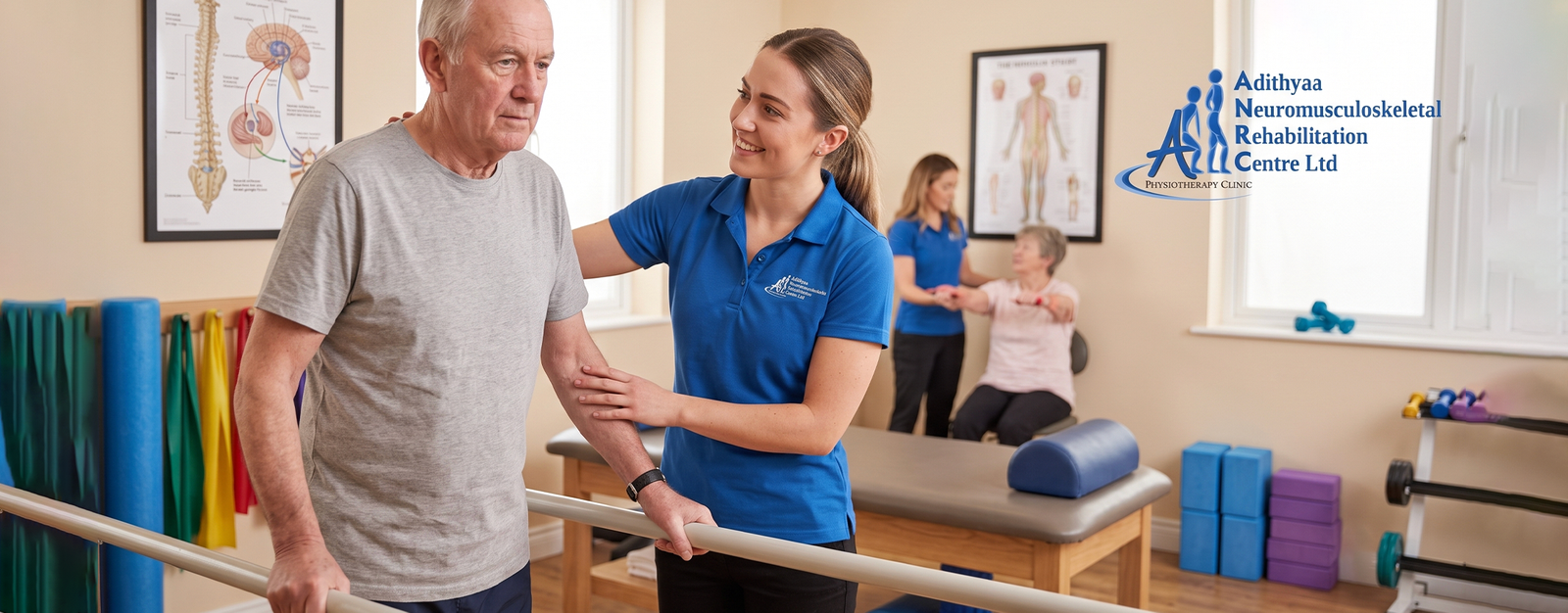
Parkinson’s disease is a long-term condition that affects how the body moves. It happens when certain nerve cells in the brain slowly stop working properly. These cells produce a chemical called dopamine, which helps control smooth and coordinated movements. When dopamine levels decrease, movement becomes slower and more difficult. Parkinson’s disease usually develops gradually. Early signs can be mild and may start on one side of the body before affecting both sides over time.
Common Symptoms
Movement-Related Symptoms:
- Shaking or tremor (often starting in one hand)
- Slowness of movement
- Muscle stiffness
- Difficulty with balance
- Smaller steps while walking
- Soft or low voice
- Small, cramped handwriting
Other Symptoms:
- Tiredness, Constipation, Sleep problems
- Low mood or anxiety
- Reduced sense of smell
- Memory or thinking changes (in later stages)
Not everyone experiences the same symptoms, and they can vary from person to person.
What Causes Parkinson’s Disease?
The exact cause is not fully understood. However, several factors may play a role:
- Aging: Risk increases with age.
- Genetics: A small number of cases run in families.
- Environmental factors: Exposure to certain toxins or chemicals may increase risk.
- Brain changes: Loss of dopamine-producing cells and buildup of certain proteins in the brain.
Quick Tips for Living with Parkinson’s
1. Move Every Day: Short walks, stretching, and balance exercises keep muscles strong. Try stepping to a beat to overcome freezing.
2. Stay Flexible & Strong: Use resistance bands or light weights. Morning stretches reduce stiffness.
3. Voice & Hand Tips: Speak slowly and project your voice. Use bigger paper or pens for handwriting.
4. Safety First: Remove trip hazards and wear non-slip shoes. Add grab bars or rails at home.
5. Mind & Mood: Meditation, puzzles, and hobbies boost mood and memory. Connect with support groups or online communities.
6. Diet & Sleep: Eat high-fibre foods and stay hydrated. Keep a regular sleep routine and avoid late caffeine.
How Physiotherapy Can Help
Physiotherapy is an important part of managing Parkinson’s disease. It helps people stay active, mobile, and independent. Our treatments focus on:
- Improves walking and balance
- Reduces stiffness and muscle tightness
- Increases flexibility and strength
- Helps prevent falls
- Teaches strategies to manage “freezing” while walking
- Supports confidence and independence in daily life
Starting physiotherapy early can make a big difference. Regular exercise and guided movement training help maintain mobility and improve overall quality of life.