Stroke Rehabilitation
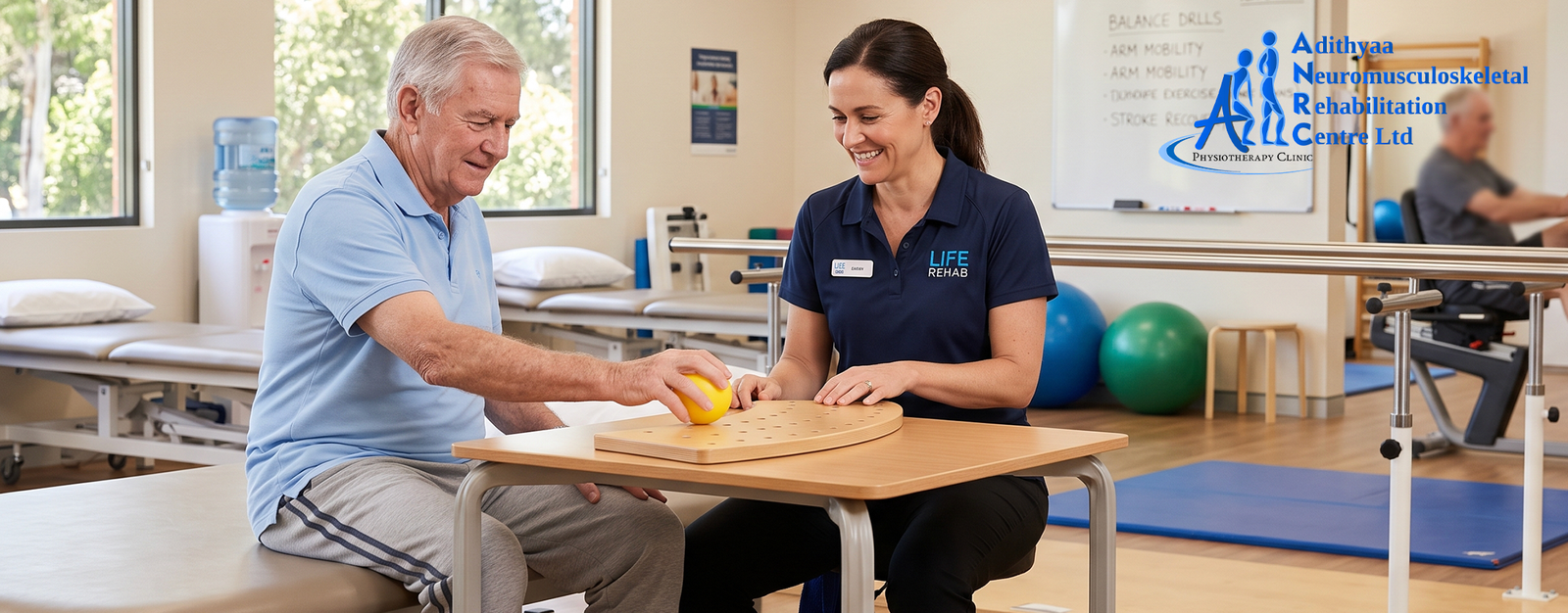
A stroke happens when the blood supply to part of the brain is cut off or reduced, starving brain tissue of oxygen. Brain cells begin to die within minutes, which is why speed of treatment has such a strong bearing on the outcome, and why the recovery journey afterwards is so individual to each person.
Common Causes:
- High blood pressure: The single biggest risk factor, placing ongoing strain on blood vessels in the brain.
- Atrial fibrillation: An irregular heartbeat that allows clots to form in the heart and travel to the brain.
- Diabetes and high cholesterol: Both accelerate damage to blood vessel walls over time.
- Smoking and inactivity: Lifestyle factors that compound the risks above and are among the most modifiable.
- Age and family history: Risk rises with age, though younger adults are increasingly affected too.
Types of Stroke:
- Ischaemic Stroke: Caused by a clot blocking a blood vessel supplying the brain. This is the most common type.
- Haemorrhagic Stroke: Caused by a blood vessel bursting and bleeding into or around the brain.
- Transient Ischaemic Attack (TIA): Often called a mini stroke, where symptoms resolve within a day. It is still a medical emergency and a strong warning sign.
- Brainstem Stroke: Affects the area controlling breathing, swallowing and consciousness, and often requires more intensive rehabilitation.
Symptoms:
Motor
Weakness or paralysis, usually on one side of the body, poor coordination, spasticity, and difficulty walking.
Sensory and Perceptual
Numbness or loss of sensation, reduced awareness of one side of the body, and problems judging balance or space.
Cognitive and Communication
Slurred or lost speech, difficulty understanding others, memory and concentration changes, and shifts in mood.
When to call for emergency help: Think FAST. Face, has it dropped on one side? Arms, can both be raised and held up? Speech, is it slurred or strange? Time, call 999 immediately if any of these are present.
How Physiotherapy Works in Stroke Rehabilitation
We are not reversing the brain injury itself. Instead, we work with the brain's own ability to adapt and reorganise, a process known as neuroplasticity, so that movement, function and independence can be rebuilt over time.
What happens if physiotherapy is delayed:
- Increased Spasticity: Muscles left unmanaged tend to tighten, making movement harder as time passes.
- Loss of Movement Patterns: The brain has fewer chances to relearn efficient movement without early, guided practice.
- Contractures: Prolonged immobility can shorten muscles and joints, sometimes permanently.
- Falls and Injury: Weakness and poor balance raise fall risk if not addressed early.
- Reduced Independence: Everyday tasks become harder, which affects confidence as much as function.
- Slower Overall Recovery: Current national guidance recommends up to three hours of therapy-based rehabilitation a day where possible.
Our goals of physiotherapy in stroke include:
- Restore Movement and Strength: Targeted, progressive exercise for the muscle groups affected by the stroke.
- Improve Balance and Walking: Rebuilding safe mobility and reducing the risk of falls.
- Manage Spasticity and Stiffness: Stretching, positioning, and handling techniques to protect joint range.
- Support Upper Limb Recovery: Task-specific practice to help regain hand and arm function for daily activities.
- Encourage Neuroplasticity: Repetitive, meaningful practice that gives the brain the best opportunity to form new pathways.
- Educate Patient and Family: Guidance on safe movement, equipment, and home exercise programmes.