Functional Neurological Disorder (FND)
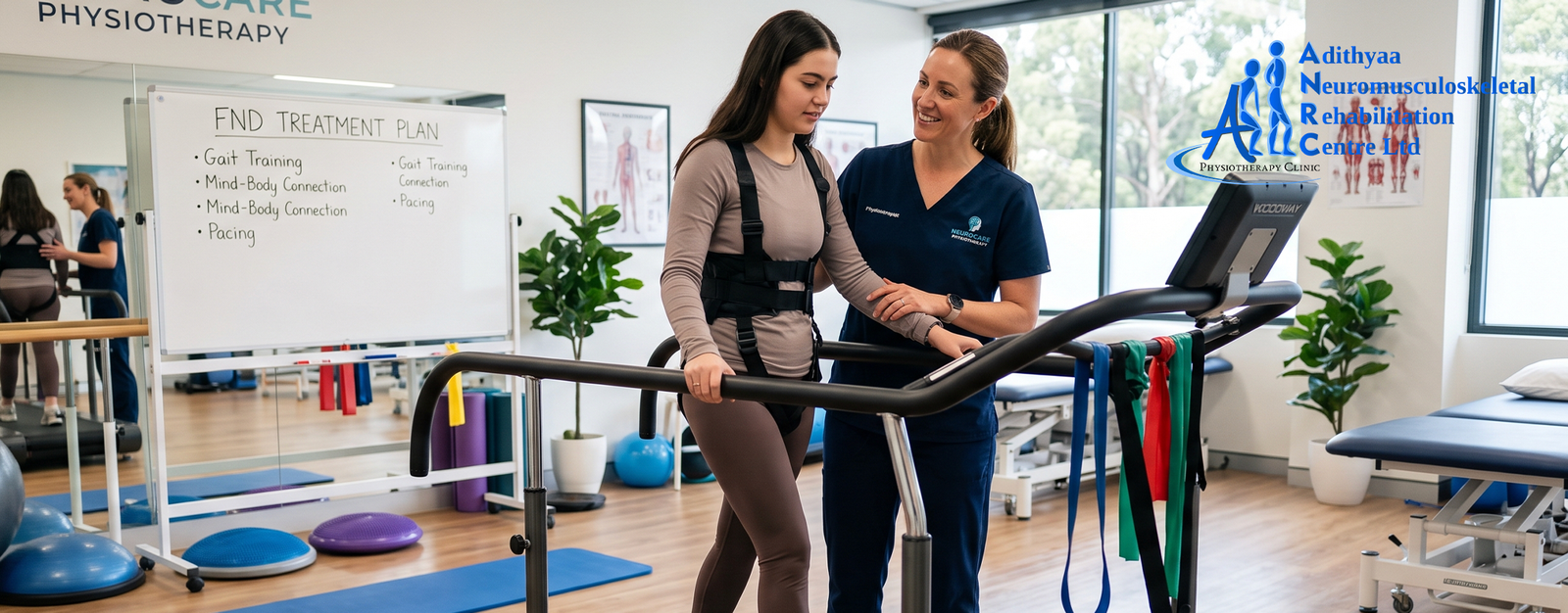
Functional Neurological Disorder, usually shortened to FND, is one of the most common reasons people end up in a neurology clinic, second only to headache. It causes real, disabling symptoms such as weakness, tremor, walking difficulty or blackouts, yet scans and standard tests often come back clear. That combination confuses a lot of people, patients and clinicians alike, so we want to explain it plainly before anything else.
Why the Scans Come Back Normal
Think of the nervous system as having hardware and software. A stroke or MS damages the hardware, meaning there is visible, structural injury a scan can pick up. FND is a software problem. The wiring itself is intact, but the way the brain sends and processes signals to the body has become disrupted, so movement, sensation or speech do not work as they should.
That does not make the symptoms any less real, and it does not mean they are imagined or exaggerated. It means the route to recovery is different, built around retraining how the brain and body communicate rather than repairing structural damage.
What Can Trigger It:
- Physical Triggers: An injury, illness, or period of pain that the nervous system does not fully switch off from, even after the body has healed.
- Psychological Load: Significant stress, anxiety, or a difficult life event can sometimes coincide with symptom onset, though not everyone with FND has an identifiable trigger.
- Other Neurological Conditions: FND can develop alongside epilepsy, migraine, or other diagnoses, which can make it harder to untangle at first.
- No Clear Trigger: For a large number of people, no single cause is ever found, and that uncertainty is something we address openly rather than glossing over.
Common Presentations:
- Functional Limb Weakness: Sudden or gradual weakness in an arm or leg that does not follow the usual patterns seen in stroke or nerve damage.
- Functional Movement Disorder: Tremor, jerks, spasms, or abnormal postures that change in character depending on distraction or attention.
- Functional Gait Disorder: Walking difficulty with a pattern that does not match typical neurological or orthopaedic causes.
- Dissociative Seizures: Episodes that resemble epileptic seizures but arise from a different mechanism, usually diagnosed by a neurologist.
Symptoms:
Movement
Weakness, tremor, jerks, dystonia, or abnormal walking patterns that can vary from day to day or even hour to hour.
Sensory and Speech
Numbness, tingling, slurred or interrupted speech, and sometimes visual disturbance without a structural cause.
Cognitive and Other
Fatigue, brain fog, poor concentration, low mood, and, for some, dissociative episodes resembling seizures.
When to see a doctor: Any new weakness, speech change, or loss of function should be assessed urgently, since it needs to be checked against stroke and other structural causes before FND can be confirmed. FND is always a diagnosis made by a neurologist based on specific clinical signs, never something to self-diagnose, and it is only once that diagnosis is in place that physiotherapy has a clear, useful role to play.
What We Have Seen at ANRC
We have treated FND at ANRC, and one thing that stood out was just how much the diagnosis itself can shake someone. A patient came to us already diagnosed, with symptoms mainly affecting one side of the body and a mix of neurological and functional difficulties. What we learned early on was that jumping straight into exercises was the wrong place to start.
We began with education and honest conversation instead. Explaining clearly what FND is, why the symptoms are genuinely real, and how the nervous system can produce them without any structural damage behind them, mattered more in those first sessions than any exercise programme. People with FND are often frightened and confused, since they are living with real symptoms but have been told their scans are clear, and that gap needs addressing before movement work can go anywhere.
The biggest lesson for us was in how the diagnosis gets communicated. Telling someone that nothing is wrong is not reassuring, it is dismissive. What actually helps is explaining that the nervous system is working differently, and that there are concrete things we can work on together to change that. Once that understanding is in place, building confidence in movement tends to follow at its own pace.
How Physiotherapy Works in FND
Since the nervous system itself is not structurally damaged, physiotherapy for FND does not start where people usually expect. Rather than moving straight into exercise, we begin with education and reassurance, because a patient who is frightened of their own symptoms will not engage well with movement work. Once someone understands what is actually happening in their body, confidence in movement tends to follow at a pace that suits them.
What happens if physiotherapy is delayed:
- Symptoms Become Habitual: The longer an abnormal movement pattern is repeated, the more established it becomes, making retraining harder later on.
- Deconditioning: Reduced activity from fear or difficulty moving leads to genuine physical weakness on top of the functional symptoms.
- Increased Anxiety Around Movement: Avoidance often grows the longer symptoms go unaddressed, which can reinforce the cycle.
- Missed Window for Recovery: Evidence consistently points to better outcomes when treatment starts soon after diagnosis, while patterns are still relatively new and flexible.
- Confusion and Frustration: Without clear explanation and a treatment plan, people are often left not knowing what is happening to them, which adds a heavy emotional burden on top of the physical one.
Our goals of physiotherapy in FND include:
- Explain the Diagnosis Clearly: Moving away from language like "nothing is wrong," toward explaining that the nervous system is working differently and that there is something concrete to work on together.
- Reduce Fear of Symptoms: Reassurance and honest conversation come before exercise, since a frightened patient rarely responds well to movement work.
- Retrain Automatic Movement: Using distraction and movement strategies to help the body move without the interference of conscious over-control.
- Build Graded Activity: A structured return to normal movement and activity levels at a pace the nervous system can tolerate.
- Work Alongside Psychology: FND recovery is often most effective with a joined-up approach, and we are upfront when a referral for psychological support would genuinely help.
- Support Self-Management: Practical strategies for flare-ups so progress is not lost every time symptoms fluctuate.